
 By IKadverts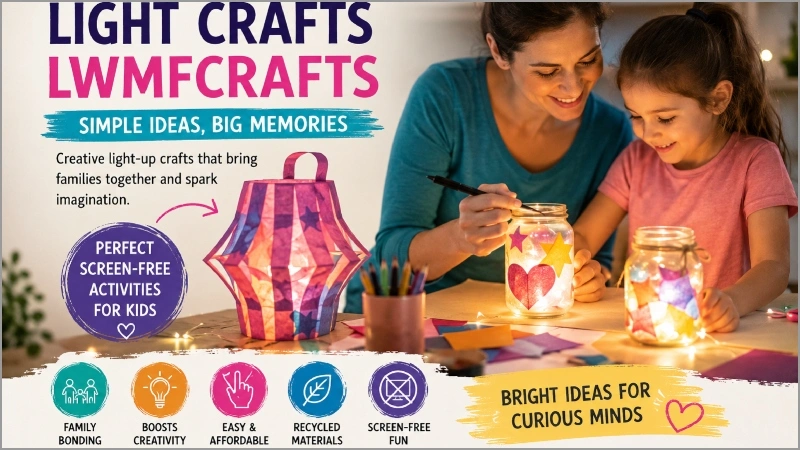
Parenting often means finding meaningful ways to keep children busy without relying on screens all day. Parents do not always need expensive toys or complicated activities. Sometimes, a few household materials, a small light crafts LWMFCrafts source, and some imagination can create an enjoyable family experience.
That is where light crafts LWMFCrafts can be useful. These simple projects combine creativity, hands-on learning, and gentle lighting to give parents and children something enjoyable to make together.
What Are Light Crafts LWMFCrafts?
Light crafts are DIY activities that combine ordinary craft materials with safe light sources. Examples include glowing jars, paper lanterns, decorated LED containers, and simple light-up decorations.
The LWMFCrafts concept fits naturally into family crafting because the projects can be adapted to different ages and skill levels. A younger child might decorate paper while an older child helps arrange battery-powered lights.
The goal is not to create a perfect decoration. The real value comes from the process: planning, making, experimenting, and spending time together.
Why Light Crafts Can Be Useful for Parents
Keeping children engaged can become challenging, especially during rainy days, school breaks, or quiet evenings at home. A light craft provides a structured activity without making the experience feel like another lesson.
Parents can use these projects to encourage:
- Creativity and imagination
- Fine-motor practice
- Problem-solving
- Patience and concentration
- Communication between parents and children
- Screen-free family time
A 2024 study published in Frontiers in Public Health surveyed 7,182 adults and found that people who participated in arts and crafts reported higher levels of happiness, life satisfaction, and a stronger sense that life was worthwhile.
While that research does not specifically measure light crafts, it provides useful context for why creative activities can have value beyond entertainment.
Simple Light Craft Projects for the Whole Family
1. Glowing Jar
A glowing jar is one of the easiest projects for beginners.
Take a clean glass jar and decorate its outside with paper shapes, ribbons, or removable decorations. Place a small battery-operated LED light inside.
Children can choose the colors and patterns while parents handle the final placement of the light.
This project works especially well as a bedroom decoration or a centerpiece for a family activity night.
2. Paper Lantern
Paper lanterns offer another simple way to introduce children to creative lighting.
Parents can help children fold or cut paper into a basic lantern shape. Add a battery-powered LED light inside rather than an open flame.
Children can personalize the lantern with stars, hearts, animals, or seasonal designs.
The activity also creates an opportunity to discuss shapes, colors, patterns, and basic design.
3. Light-Up Drawing
Parents can turn a normal drawing activity into something more interesting by creating a simple light-up display.
For example, a child can draw a nighttime city, space scene, forest, or underwater world. Small LED lights can then highlight selected areas of the artwork.
This approach gives children the opportunity to think about where light appears naturally and how brightness changes the appearance of an object.
4. Recycled Light Decoration
Crafting does not have to mean buying new supplies.
Families can reuse cardboard, paper containers, clean jars, and other suitable household materials. Children can transform these objects into decorative light holders.
This teaches an important parenting lesson: creativity does not depend on expensive materials.
It also gives parents a practical way to introduce the idea of reusing everyday objects instead of immediately throwing everything away. Explore more practical tips, creative ideas, and helpful family resources on my website.
How Parents Can Make Craft Time More Meaningful
The biggest mistake parents can make is taking over the project.
If an adult creates everything, the child becomes an observer instead of a creator. Instead, parents should give children age-appropriate choices.
Ask questions such as:
“Which design should we use?”
“Where should the light go?”
“What happens if we change the color?”
These questions encourage children to think rather than simply follow instructions.
Parents can also accept imperfect results. A crooked paper lantern or uneven decoration is not necessarily a failure. It shows that the child actually participated.
Light Crafts and Screen-Free Parenting
Screens can be useful for education and entertainment, but children also need opportunities for hands-on activities.
Light crafts can provide a simple alternative during short periods when parents want children to step away from phones, tablets, or television.
The activity does not need to last for hours. Even a 20- or 30-minute project can become a useful part of a family’s routine.
For example, parents might establish a weekly “creative evening” when everyone chooses a small craft to complete together.
This makes crafting a predictable family habit rather than something parents have to invent every day.
Safety Should Come First
Parents should always choose age-appropriate materials and supervise children around craft supplies.
For light-based projects, battery-operated LEDs are generally more suitable for children’s crafts than candles or exposed flames. Keep tiny craft pieces out of reach of toddlers to prevent them from accidentally putting them in their mouths.
Parents should also inspect batteries, wires, and light strings before use. Avoid damaged electrical components and keep water away from powered decorations.
The safest project is one where children can focus on creativity while adults manage potentially hazardous components.
Making Light Crafts Educational
A good craft can become an informal learning activity.
Parents can use a glowing project to introduce basic science concepts. Ask why some materials allow light through while others block it. Compare transparent, translucent, and opaque materials.
Math can also become part of the activity. Children can count lights, measure paper, identify shapes, or create repeating patterns.
Older children can experiment with design principles such as contrast, symmetry, and color combinations.
This approach turns an ordinary craft into an opportunity for discovery without making it feel like homework.
Light Crafts for Different Ages
Toddlers: Keep projects extremely simple. Let them choose colors, stick large decorations onto paper, or observe the finished light.
Preschoolers: Introduce basic cutting with supervision, gluing, coloring, and simple patterns.
School-age children: Let them plan designs, measure materials, and assemble larger parts of the craft.
Older children: Encourage independent designs, recycled-material projects, and more advanced decorative concepts.
The same basic idea can therefore grow with the child.
Final Thoughts
Light crafts LWMFCrafts can be more than attractive decorations. For parents, they offer a practical way to combine creativity, learning, and family connection in one simple activity.
A glowing jar, paper lantern, or handmade light decoration may look small, but the experience behind it can be much more valuable. Children get an opportunity to make decisions, solve small problems, and express their imagination while parents get meaningful time to connect with them.
The best part is that families do not need professional crafting skills. Start with safe materials, keep the project simple, and allow children to contribute their own ideas.
In parenting, meaningful activities do not always require complicated planning. Sometimes, a little light and a little creativity are enough to turn an ordinary afternoon into a memorable family moment. Discover more helpful tips and ideas by exploring the other resources on my website.