
 IKadverts
 Inventive LWMFCrafts: Creative DIY Ideas for Kids and Families

Inventive LWMFCrafts turns ordinary household materials into creative projects that help children explore ideas, solve problems, and enjoy meaningful family time. From cardboard inventions to colorful paper designs, these activities let kids make something of their own without expensive supplies or complicated instructions.
For parents in the United States, the best craft activities are often those that fit naturally into everyday routines. A rainy afternoon, a quiet weekend, or a short break after school can become an opportunity to create, experiment, and learn together.
What Makes Inventive LWMFCrafts Different?
Traditional craft instructions often focus on producing a specific finished object. An inventive approach begins with a question: What could a child create with the materials available?
For example, an empty cereal box might become a toy garage, a pretend grocery store, or a small animal habitat. Instead of following one fixed design, children decide what to build and how to decorate it.
This approach gives children room to experiment. If their first idea fails, they can change the design, try another material, or find a different solution.
Parents can support children’s creativity by asking thoughtful questions like these:
- What else could we make from this box?
- How could we make the structure stronger?
- What materials would be most suitable for this activity?
- What would you change if you made it again?
The focus should be on letting children explore their imagination and take pride in making something of their own, rather than aiming for a flawless result.
Five Inventive LWMFCrafts Projects to Try at Home
These projects use common materials and can be adapted to different interests and abilities.
1. Build a Cardboard City
Materials: Small cardboard boxes, paper, crayons, tape, and child-safe decorating supplies.
Arrange several boxes to create houses, shops, schools, or other buildings. Kids can decorate each building with drawn windows, paper doors, and connecting roads to bring their miniature city to life.
Make it more inventive: Ask children to plan a city that includes a park, a crossing, and a place for emergency vehicles. This adds planning and decision-making to the activity.
For younger children, prepare the boxes and let them decorate. Older kids can plan the design and put the different parts together while an adult guides them.
2. Create a Recycled Robot
Materials: Clean cardboard pieces, paper shapes, markers, and child-safe glue.
Invite children to design a robot using different shapes for its head, body, arms, and legs. They can give it a name and decide what problem their invention might solve.
Add a challenge: Ask children to invent one useful feature, such as a pretend book organizer or a helper that reminds the family to water plants.
Avoid small detachable pieces when working with young children who may put objects in their mouths.
3. Design a Storytelling Wheel
Materials: Paper, crayons, a paper plate, and a paper fastener if appropriate for the child’s age.
Divide a paper plate into sections and draw different characters, places, or objects in each section. Children can select a few elements and use them to invent a short story.
For example, a turtle, a garden, and a lost key could become the starting points for an adventure.
This activity combines drawing with storytelling and encourages children to develop their own ideas rather than copy an example.
4. Make a Paper Bridge
Materials: Paper, cardboard supports, and a few lightweight toy figures.
Challenge children to build a bridge between two stable supports. Test whether it can hold a lightweight toy, then experiment with folding the paper into different shapes.
A flat sheet may bend easily, while folded paper can create a different structure.
Ask children to predict what will happen before each test. If the bridge collapses, encourage them to adjust their design instead of immediately providing the answer.
5. Create a Family Idea Jar
Materials: A clean container, small paper slips, and pencils.
Ask each family member to suggest a craft or creative activity. Write one idea on each slip and place them in the container.
Ideas might include designing bookmarks, drawing imaginary animals, making greeting cards, or building something from recycled cardboard.
When the family needs an activity, choose one slip and work on the project together.
This is especially useful for busy households because the next activity is already planned.
Choosing Crafts That Match Your Child’s Age and Interests
An activity that excites one child may frustrate another. Consider the child’s interests, abilities, available time, and level of independence before selecting a project.
| Consideration | Practical approach |
|---|---|
| Age and ability | Choose tasks the child can participate in comfortably. |
| Time available | Pick a small project for busy afternoons. |
| Materials | Start with supplies already available at home. |
| Interests | Use favorite animals, stories, vehicles, or colors as inspiration. |
| Supervision | Match tools and materials to the child’s age and abilities. |
One common mistake is preparing a complicated project with too many steps. Children may lose interest before reaching the enjoyable part.
A better approach is to introduce one clear challenge, provide a few materials, and let children make meaningful choices. You can always add another step if they remain interested.
Making Inventive LWMFCrafts Safe and Affordable
Creative activities do not require a large shopping list. Paper, clean cardboard, crayons, and suitable household materials can provide plenty of possibilities.
Before starting a project, check the supplies and prepare the workspace.
- Choose art materials intended for children’s use.
- Read product labels and follow age recommendations.
- Keep an eye on children whenever they work with scissors, glue, or craft tools.
- Keep small pieces away from children who may choke on them.
- Avoid containers that previously held chemicals or other hazardous substances.
-
Affordability also depends on how materials are used. Before purchasing new supplies, look through your existing craft box. Save suitable clean packaging, reuse paper where practical, and choose projects that use similar materials.
How Parents Can Encourage Creativity Without Taking Over
Parents naturally want to help when a child struggles with a project. However, completing every difficult step for the child can remove opportunities to experiment.
Try offering support without controlling the result.
Give choices. Let children choose colors, shapes, decorations, or the purpose of their invention.
Ask instead of correcting. Questions such as “What else could you do?” help children think creatively and explore different ways to solve a problem.
Allow changes. A child who starts making a house and finishes with a spaceship has still practiced creative decision-making.
Focus on effort. Notice the child’s ideas, persistence, and willingness to try again rather than judging the finished craft alone.
Respect different results. Children do not need to produce identical projects. Their differences can be part of the creative experience.
The most useful role for a parent is to provide suitable materials, maintain a safe environment, and offer help when needed.
Conclusion
Inventive LWMFCrafts starts with a simple idea: ordinary materials can inspire extraordinary imagination. A cardboard box, a few sheets of paper, or a homemade idea jar can give children opportunities to create, experiment, and share time with their families.
Choose one project that suits your child’s interests, gather a few safe materials, and leave room for unexpected ideas. The most rewarding result may not be the finished craft, but the decisions, discoveries, and conversations that happen along the way.
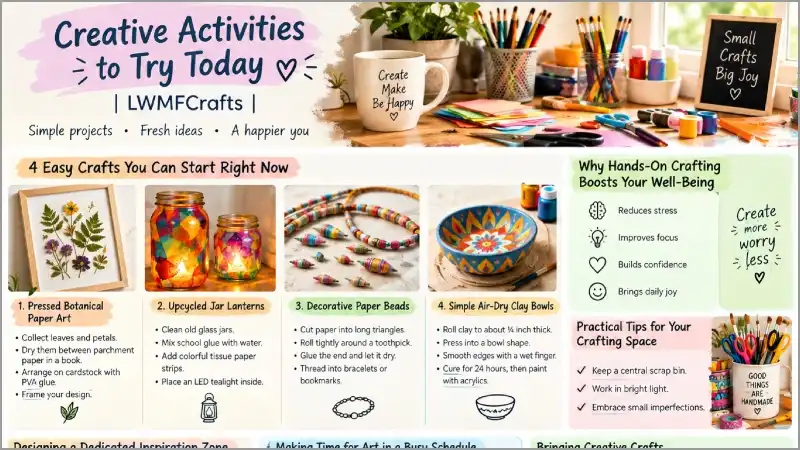
Creative Activities to Try Today | LWMFCrafts
Finding a quick spark of inspiration can instantly brighten a slow afternoon or a stressful...

Activities Brought to You by LookWhatMomFound LWMFCrafts for Parents & Kids
Parenting is not about filling every minute of the day with complicated plans. Activities Brought...

10 Fast Crafts LWMFCrafts Ideas for Busy Crafters on a Budget
Finding time for creative DIY projects often feels impossible when you are balancing a busy...